
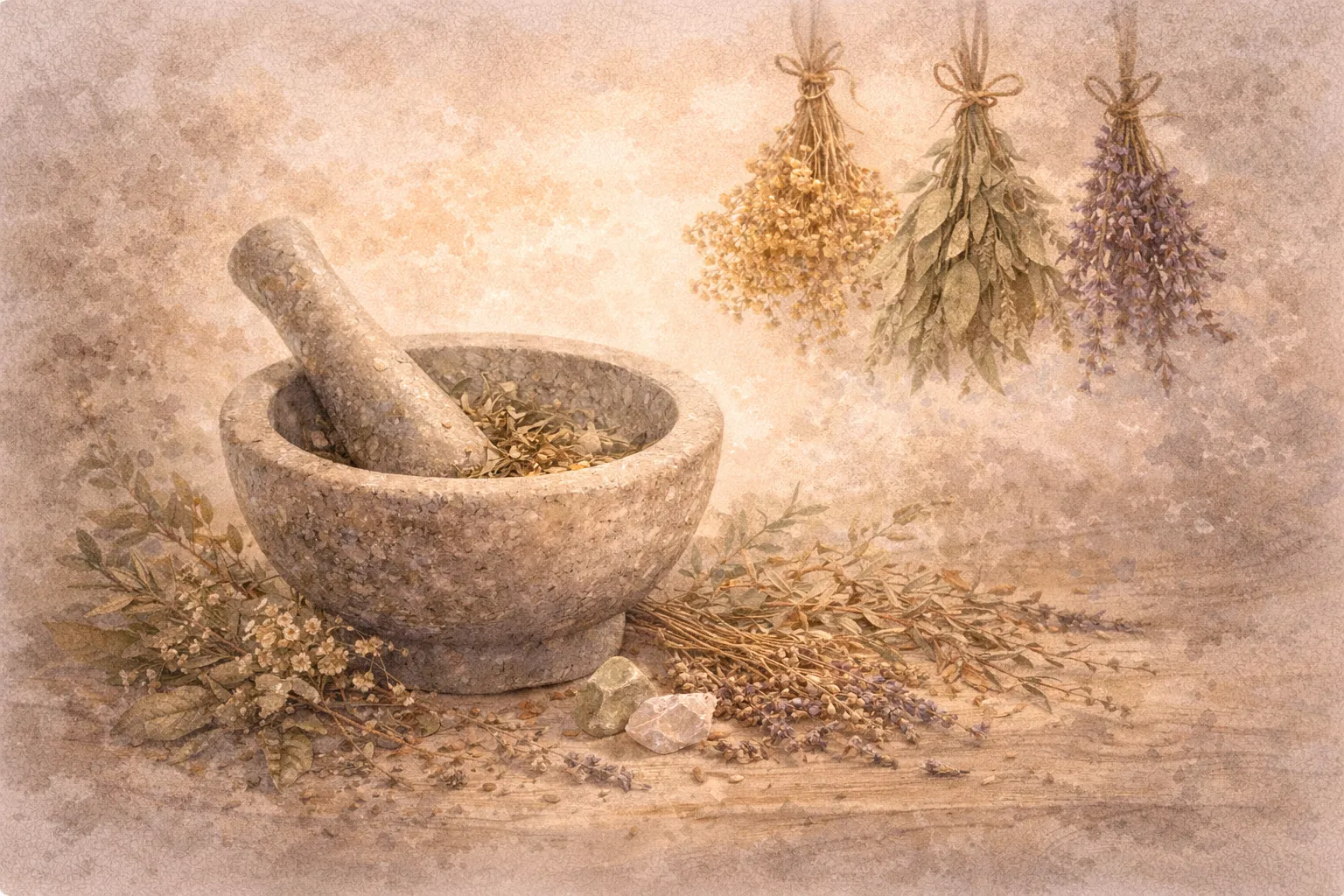
Women have been navigating this transition for as long as there have been women. Long before clinical trials, there were grandmothers, midwives, herbalists, and healers passing down knowledge about what helped.
This page explores plant-based and traditional approaches—not just through the lens of “what does the research say,” but also “what have people done, and why might it matter?”
The Limits of Evidence-Based Framing
Modern evidence-based medicine values randomized controlled trials (RCTs). This approach has real strengths—it helps distinguish what works from what we wish worked, or what happens to coincide with natural improvement.
But it also has blind spots:
- Traditional knowledge is rarely funded for study—there’s no profit motive
- Whole-system approaches don’t fit the single-intervention model—Chinese medicine, for instance, is individualized and combines herbs
- Subjective experience is hard to measure—feeling “more balanced” may matter even if hot flash counts don’t change
- The placebo effect is real healing—ritual, belief, and care have physiological effects
This doesn’t mean everything traditional “works” in the pharmacological sense. But absence of RCT evidence isn’t the same as evidence of absence—and there may be value in these approaches that our measurement tools miss.
Traditional Chinese Medicine (TCM)
TCM views menopause through the lens of yin, yang, and qi—not as a disease but as a natural transition requiring rebalancing.
Common TCM Approaches
Kidney Yin Deficiency (common pattern for hot flashes, night sweats):
- Herbs: Rehmannia (shu di huang), Cornus (shan zhu yu), Dioscorea (shan yao)
- Classic formula: Liu Wei Di Huang Wan (Six Ingredient Pill with Rehmannia)
Kidney Yang Deficiency (cold signs, fatigue, low libido):
- Herbs: Cinnamon bark (rou gui), Aconite (fu zi—processed), Eucommia (du zhong)
- Classic formula: Jin Gui Shen Qi Wan (Kidney Qi Pill)
Qi and Blood Deficiency (fatigue, weakness, poor digestion):
- Si Jun Zi Tang (Four Gentlemen Decoction)—ginseng, atractylodes, poria, licorice
- Ba Zhen Tang (Eight Treasure Decoction)—combines qi and blood tonics
Liver Qi Stagnation (mood swings, irritability, breast tenderness):
- Xiao Yao San (Free and Easy Wanderer)—one of the most commonly prescribed formulas for women
What the Research Shows
- A systematic review of 19 RCTs (2,469 patients) found TCM formulas similarly effective to hormone therapy for hot flushesChen LR, et al. Chinese Herbal Formulae for the Treatment of Menopausal Hot Flushes: A Systematic Review and Meta-Analysis. PLOS ONE. 2019;14(9):e0222383.
- Hard to study because treatment is individualized
- Generally considered safe—adverse events were few and mild
- Quality control of herbs is a real concern (contaminants, substitutions)
Working with TCM
TCM is a whole-system approach—diagnosis involves pulse, tongue, symptoms, and constitution. Off-the-shelf formulas may or may not match your pattern. If you’re drawn to this approach, consider working with a licensed acupuncturist or TCM practitioner who can individualize treatment.
Ayurveda
The traditional medicine of India, Ayurveda views menopause as a transition from the pitta (fire) life stage to vata (air/ether). Symptoms arise from imbalances in these doshas.
Common Ayurvedic Approaches
Shatavari (Asparagus racemosus):
- “She who possesses a hundred husbands”—traditional women’s tonic
- Used for reproductive health, libido, and menopausal symptoms
- RCTs show 51-73% reduction in menopausal symptoms; contains phytoestrogens that bind to estrogen receptorsBhosal SK, et al. Efficacy and Safety of Shatavari Root Extract for Perimenopause. International Journal of Women's Health. 2025;17:999-1014.
Ashwagandha (Withania somnifera):
- Adaptogen for stress, fatigue, and anxiety
- Meta-analysis of 12 RCTs shows significant reductions in anxiety and stress; also reduces serum cortisolAkhgarjand C, et al. Does Ashwagandha Supplementation Have a Beneficial Effect on the Management of Anxiety and Stress? A Systematic Review and Meta-Analysis. Journal of Ethnopharmacology. 2022;295:115471.
- May help with libido and energy
Brahmi (Bacopa monnieri):
- Traditional brain tonic
- Meta-analysis of 9 RCTs shows improved speed of attention and cognitive processing; also reduces anxietyKongkeaw C, et al. Meta-Analysis of Randomized Controlled Trials on Cognitive Effects of Bacopa monnieri Extract. Journal of Ethnopharmacology. 2014;151(1):528-535.
Triphala:
- Three-fruit formula for digestion and elimination
- Considered foundational for overall health
Lifestyle Practices
Ayurveda emphasizes:
- Daily routines (dinacharya)—regularity calms vata
- Warm, cooked, grounding foods
- Oil massage (abhyanga)—particularly with sesame oil
- Specific yoga practices for this life stage
Western Herbalism
European and American herbal traditions have their own approaches to supporting women through menopause.
Commonly Used Herbs
Black Cohosh (Actaea racemosa):
- Native American traditional use
- Most-studied menopausal herb in Western research
- Cochrane review found insufficient evidence vs placebo, though some studies show benefit; mechanism unclear (not estrogenic)Leach MJ, Moore V. Black Cohosh (Cimicifuga spp.) for Menopausal Symptoms. Cochrane Database of Systematic Reviews. 2012;(9):CD007244.
- Standardized extract (Remifemin) has best evidence
- Rare liver concerns—discuss with provider
Vitex/Chaste Tree Berry (Vitex agnus-castus):
- Traditional European use for women’s complaints
- May affect prolactin and progesterone
- Sometimes used for PMS-like perimenopausal symptoms
Red Clover (Trifolium pratense):
- Contains isoflavones
- Meta-analysis shows significant reduction in hot flushes (−1.73/day vs placebo); more effective at higher doses (≥80mg isoflavones) and in women with ≥5 hot flushes dailyKanadys W, et al. Evaluation of Clinical Meaningfulness of Red Clover Extract to Relieve Hot Flushes. Nutrients. 2021;13(4):1258.
- Generally safe, but caution with hormone-sensitive conditions
Hops (Humulus lupulus):
- Contains 8-prenylnaringenin, a potent phytoestrogen
- Traditional use for sleep and anxiety
- RCT showed significant improvement in menopausal symptoms vs placebo at 6 weeks; rapid improvement in hot flushesHeyerick A, et al. A First Prospective, Randomized, Double-Blind, Placebo-Controlled Study on the Use of a Standardized Hop Extract. Maturitas. 2006;54(2):164-175.
Sage (Salvia officinalis):
- Traditional European remedy specifically for sweating
- Multiple RCTs show significant reduction in hot flash frequency and severityGhazanfarpour M, et al. The Effect of Salvia Officinalis on Hot Flashes in Postmenopausal Women: A Systematic Review and Meta-Analysis. Journal of Multidisciplinary Healthcare. 2023;16:1857-1867.
- Easy to use as tea
Motherwort (Leonurus cardiaca):
- Traditional “women’s herb” for anxiety, heart palpitations
- Calming without sedation
- Limited formal research
St. John’s Wort (Hypericum perforatum):
- Cochrane review: superior to placebo for mild-moderate depression; similarly effective as standard antidepressants with fewer side effectsLinde K, et al. St John's Wort for Major Depression. Cochrane Database of Systematic Reviews. 2008;(4):CD000448.
- Significant drug interactions—including with birth control, some medications
- Not appropriate for everyone
Valerian (Valeriana officinalis):
- Traditional sleep aid
- Meta-analysis suggests may improve subjective sleep quality (RR 1.8), though evidence limited by methodological issuesBent S, et al. Valerian for Sleep: A Systematic Review and Meta-Analysis. American Journal of Medicine. 2006;119(12):1005-1012.
- May help when sleep disturbance is primary complaint
Nervines and Adaptogens
Beyond specific menopause herbs, many herbalists emphasize:
Nervines (support nervous system):
- Oat straw, skullcap, lemon balm, passionflower
- For anxiety, irritability, sleep
Adaptogens (support stress response):
- Ashwagandha, rhodiola, eleuthero, holy basil
- For fatigue, resilience, overwhelm
Indigenous and Folk Traditions
Across cultures, menopause has been marked by traditional practices:
Native American traditions:
- Black cohosh, dong quai (though originally Chinese), red raspberry leaf
- Many tribes honored menopause as entry into “wise woman” status
- Sweat lodges and ceremony for life transitions
Latin American traditions:
- Maca root (Peruvian)—traditional use for energy, libido, fertility
- Damiana—traditional aphrodisiac
- Various regional herbs depending on geography
African traditions:
- Varied by region and culture
- Often integrated with spiritual practices
- Many traditional remedies not well documented in Western sources
European folk traditions:
- “Change of life” teas with sage, red clover, hops
- Elder flower for sweating
- Integration with food as medicine
Modern Herbal Blends
The supplement market is full of menopause formulas. Some observations:
What to look for:
- Transparent ingredient lists with amounts
- Reputable companies with third-party testing
- Realistic claims (not miracle cures)
- Herbs that make sense together
What to be cautious about:
- Proprietary blends that hide amounts
- Extravagant claims
- Very cheap products (quality costs money)
- Products with many ingredients at low doses (“fairy dusting”)
Finding what works for you:
- Individual response varies enormously
- What helps your friend may not help you
- Give things adequate trial (often 2-3 months)
- Pay attention to your body’s response
Some women find products like herbal “menopause support” blends helpful. Others don’t. The only way to know is to try—thoughtfully, one thing at a time, paying attention.
How to Think About All This
A Framework for Exploration
Start with safety: Some herbs interact with medications or have contraindications. Research before trying, especially if you’re on other medications.
Consider your constitution: What works for someone else may not work for you. Traditional systems account for individual variation.
Give adequate trials: Herbs often work gradually. Unless you have an adverse reaction, give things 6-8 weeks before deciding.
One thing at a time: Hard to know what’s helping if you change everything at once.
Quality matters: Herbs vary in potency, purity, and preparation. Cheap supplements may be ineffective or contaminated.
Work with practitioners: Herbalists, TCM practitioners, naturopaths, and Ayurvedic doctors can individualize approaches.
Trust your experience: If something helps you feel better, that matters—even if studies are inconclusive.
The Grandmother Test
One herbalist’s framework: “Would my grandmother have used this? Would she have given it to her daughter?”
Traditional remedies that have been used for generations have a track record of at least not causing obvious harm. Novel, concentrated, or isolated compounds are less tested by time.
This isn’t foolproof—some traditional remedies are genuinely dangerous—but it’s one lens for thinking about relative safety.
Safety Considerations
Drug interactions:
- St. John’s Wort interacts with MANY medications
- Some herbs affect liver enzymes (CYP450 system)
- Always disclose herbs to your healthcare providers
Hormone-sensitive conditions:
- Phytoestrogens (soy, red clover, hops) may affect hormone-sensitive cancers
- Discuss with oncologist if you have history of breast cancer
Quality and contamination:
- Herbs can be contaminated with heavy metals, pesticides, or incorrect species
- Look for third-party testing (USP, NSF, ConsumerLab)
- Buy from reputable sources
Pregnancy and breastfeeding:
- Many herbs are contraindicated
- Some traditional “women’s herbs” are specifically dangerous in pregnancy
“Natural” doesn’t mean safe:
- Kava: traditional Pacific use, but associated with liver damage
- Comfrey: traditional use, but contains liver-toxic compounds
- Traditional ≠ automatically safe
Resources for Further Exploration
Books:
- The Menopause Herbal by Amanda McQuade Crawford
- Herbal Healing for Women by Rosemary Gladstar
- The Web That Has No Weaver by Ted Kaptchuk (TCM)
- Adaptogens by David Winston
Web:
- Richard Whelan’s Herbal Medicine — Detailed monographs on individual herbs from a respected New Zealand medical herbalist
Finding practitioners:
- American Herbalists Guild (herbalists)
- NCCAOM (acupuncturists/TCM)
- National Ayurvedic Medical Association (Ayurveda)
Quality verification:
- ConsumerLab.com (independent testing)
- USP Verified supplements
- NSF International certification
The absence of extensive clinical trials doesn’t mean these approaches are worthless—it often means they haven’t been profitable enough to study. Your grandmother’s remedies may hold wisdom that our measurement tools can’t capture. Pay attention to your own body. It knows things.